


Cat Coffee Shop

Tomodachi Life: Living the Dream

Joy Pony

Game of Farmers

Life The Game

Good Coffee, Great Coffee

Cinema Simulator




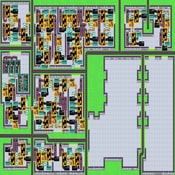



















In Village Craft you start with nothing but an axe, a patch of forest, and a road running past your plot that nobody’s using yet — and that empty road matters more than it looks like it does at first.
| Genre | Village building, crafting |
| Perspective | Top-down |
| Platform | Browser, HTML5 |
| Core loop | Gather, craft, build, expand |
Chopping the first handful of trees kicks off the entire production chain in Village Craft, converting raw wood into the basic materials the earliest buildings need. Nothing about the opening minutes is complicated, which is part of the appeal — the game trusts a new player to figure out the gather-craft-build rhythm through doing it rather than a lengthy tutorial.
Once the first stall goes up, its placement ends up mattering far more than most new players expect. A stall built close to the road that travelers actually walk past earns steady income, while the same stall tucked away in an unused corner of the map sits mostly idle no matter how well-stocked it is. Players who treat road placement as an afterthought instead of a core planning decision tend to end up rebuilding their early layout once they realize how much foot traffic actually drives income.
Resource nodes near the starting plot — trees, and eventually stone and ore deposits further out — are limited, so decisions made in the first few minutes about what to prioritize gathering ripple into how quickly the village can afford its next tier of buildings. Efficiency-minded players tend to map out resource nodes before committing to a building layout, while more casual players often just build wherever looks good and adjust later.
Village Craft layers its crafting system so that early materials like basic wood and stone feed into more advanced goods once the right building unlocks, and skipping ahead to expensive buildings before the resource chain can actually support them is one of the more common ways a new village stalls out. Storage capacity caps how much of any single resource can be held at once, and players who don’t prioritize storage upgrades early tend to hit that ceiling constantly, wasting gathered materials that simply have nowhere to go.
Placing production buildings close to the resource nodes they depend on cuts down on travel time noticeably, and that efficiency compounds the longer a session runs. A woodcutter’s hut built right next to a forest patch will keep pace with demand in a way the same building placed across the map never quite manages.
Queuing crafts before logging off is one of the more useful habits experienced players settle into, since production keeps running in the background and a village comes back online with a stockpile waiting rather than an idle queue. New players often miss this entirely on their first few sessions, effectively losing progress every time they log off with an empty queue.
Prioritize storage upgrades early rather than treating them as optional — a village that caps out on wood or stone constantly is losing production every time a full storage bin blocks further gathering, which slows every other system that depends on those materials.
Progress requires an active internet connection to load and save, since it runs as a browser-based game rather than an offline installed build, so a stable connection matters if you’re planning a longer session.
Village Craft never stops being about that first road and that first stall — by the time a player has three or four production buildings running and travelers are actually stopping to spend at each one, the empty patch of forest from the opening minutes is unrecognizable as the same plot of land.