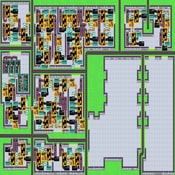
You harvest tomatoes, carry fresh burger ingredients to a preparation station, and then notice a growing line of hungry customers waiting near the counter in Burger Bounty. That moment captures the entire rhythm of the game. What begins as a simple restaurant operation gradually transforms into a fast-moving management challenge where farming, cooking, staffing, and customer service all compete for attention. Every new upgrade creates opportunities for greater profits, but each expansion also introduces additional responsibilities that must be managed efficiently.
| Genre |
Restaurant Management Simulation |
| Main Focus |
Burger Production |
| Primary Activities |
Farming, Cooking, Serving |
| Progression |
Restaurant Expansion |
Building a Restaurant in Burger Bounty
The opening phase introduces the complete production loop. Players grow ingredients, transport resources to preparation stations, assemble burgers, and serve customers. Unlike many restaurant games that focus exclusively on cooking, this game places equal importance on resource production. Fresh ingredients do not appear automatically. Every burger depends on successful farming and supply management.
Many beginners focus entirely on serving customers while neglecting ingredient production. The result is usually the same: empty preparation stations and frustrated customers waiting for orders. Learning how to balance both sides of the operation becomes one of the first major lessons.
The game rewards consistency. A restaurant that serves customers steadily often earns more than a restaurant that expands too quickly and struggles to maintain inventory.
Casual players often enjoy watching the restaurant grow from a small operation into a busy business, while management-focused players spend time optimizing every stage of production for maximum efficiency.
Ingredient Flow in Burger Bounty
As new ingredients become available, supply chains become increasingly important. What begins with basic burger components gradually develops into a larger network of production stations that all require attention. Every ingredient must arrive at the correct location before customers can be served.
Community discussions frequently include terms such as “production loop,” “restock cycle,” and “downtime.” These phrases describe the efficiency of ingredient movement throughout the restaurant. Experienced players constantly monitor these systems because even a brief interruption can reduce profits.
By the time several preparation stations operate simultaneously, movement efficiency becomes one of the most valuable skills in the game. Small delays repeated dozens of times throughout a session eventually become significant.
One commonly discussed criticism involves the amount of manual transportation required during the middle stages. Some players enjoy the active involvement, while others prefer the later portions of the game where automation reduces repetitive tasks.
Hiring Workers in Burger Bounty
Workers become increasingly valuable as operations expand. Employees can handle harvesting, transportation, and other routine duties that would otherwise consume large amounts of time. Deciding when to invest in additional staff creates an important strategic choice.
Many new players hire workers immediately whenever possible. Experienced players usually evaluate where bottlenecks exist first. A worker assigned to the most restrictive part of production often provides greater benefits than several workers assigned inefficiently.
Once a reliable workforce operates throughout the restaurant, the focus shifts from constant manual labor toward planning and expansion. The game begins feeling much more like a management simulation than a farming challenge.
A recognizable moment for longtime players occurs when several workers move ingredients simultaneously while customers continue arriving without interruption. That smooth flow usually signals a well-balanced operation.
Advanced Expansion Strategies in Burger Bounty
Workflow balance becomes one of the most important concepts during later stages. A restaurant cannot rely solely on strong ingredient production or strong customer service. Both systems must support one another continuously.
By the time larger dining areas become active, successful players start thinking about the entire operation rather than individual tasks. Every production station influences multiple areas of the restaurant. Solving one bottleneck often improves performance throughout the business.
Completionist players enjoy unlocking every available upgrade, while optimization-focused players experiment with staff placement and production routes. Both approaches reveal additional depth within the management systems.
Another frequently searched topic concerns whether farming or customer service matters more. Extended play demonstrates that neither can succeed independently. Strong ingredient production supports strong service, and strong service transforms those ingredients into revenue.
When should workers be hired?
Workers provide the greatest value when specific tasks begin slowing the entire operation. Hiring based on actual bottlenecks usually produces better results than filling every available position immediately. Careful staffing often improves efficiency more than rapid expansion.
Why do customers stop receiving burgers?
Supply shortages are the most common cause. Missing ingredients, delayed transportation, or overloaded preparation stations can interrupt production. Monitoring every stage of the supply chain helps identify these problems before they affect large numbers of customers.
What is the fastest way to grow the restaurant?
Maintaining a steady production loop generally creates stronger long-term growth than expanding aggressively. Restaurants that consistently keep ingredients available and customers served tend to generate resources more reliably than restaurants focused only on expansion.
Burger Bounty stays engaging because every upgrade changes the relationship between farming, cooking, and customer service. Whether managing workers, optimizing production loops, or maintaining a constant flow of ingredients through preparation stations, Burger Bounty continually rewards players who think about the entire restaurant rather than a single task.