


Cat Coffee Shop

Tomodachi Life: Living the Dream

Joy Pony

Game of Farmers

Life The Game

Good Coffee, Great Coffee

Cinema Simulator























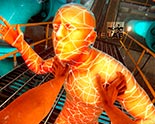
You step off the landing pod onto a base that stopped answering radio calls three days ago, and the first door you open leads straight into a corridor with the lights already flickering. Nobody told you what the research team was actually working on down here. BONELAB makes you find that out yourself, one abandoned lab at a time.
| Genre | Third-Person Horror |
| Setting | Abandoned space base |
| Role | Space patrolman investigating a deserted facility |
| View | Third-person, with a first-person mode also available |
The setup casts you as a patrolman sent to check on a facility that went quiet without explanation. What starts as a routine inspection turns into room-by-room exploration of a base clearly built for something the crew was not supposed to be doing. Corridors connect living quarters, storage bays, and research wings, and the base’s atmospheric lighting does a lot of work making even empty rooms feel like something could be waiting just past the doorway.
Third-person perspective gives you a wider view of your surroundings than a first-person camera would, which matters once threats start appearing, since spotting movement at the edge of a room a beat earlier can be the difference between backing away calmly and getting cornered.
Deeper into BONELAB, the story shifts from a simple missing-crew mystery into something worse: a hidden laboratory where biological experiments were being developed, seemingly aimed at making the surface world uninhabitable. That reveal recontextualizes everything you have already walked past, and rooms that seemed like standard storage on a first pass read very differently once you know what the base was actually building.
New players tend to rush through the living quarters and storage bays because nothing seems to be happening yet, which means they miss environmental details that explain what went wrong before the laboratory section makes it explicit. Slowing down in the early rooms actually pays off, since BONELAB plants its warning signs well before the first real threat shows up.
The other common mistake is treating the third-person camera as purely cosmetic. Using it to peek around corners and check open doorways before committing to a room is a real tactic here, not just a viewing preference.
Third-person is the main perspective, giving a wider view of the base’s corridors and rooms, though a first-person alternative version exists for players who prefer a tighter, more claustrophobic view of the same facility.
The base’s research wing turns out to house a secret biological weapons project, with monstrous results that explain both the crew’s disappearance and the threats you encounter deeper into the facility.
BONELAB is not a long game, and that is arguably part of what makes it work. A tightly paced building can escalate from routine inspection to biological weapons cover-up without overstaying its welcome, and by the time you reach the base’s core, that flickering light from the landing pod corridor makes a lot more sense than it did on arrival.