


Cat Coffee Shop

Tomodachi Life: Living the Dream

Joy Pony

Game of Farmers

Life The Game

Good Coffee, Great Coffee

Cinema Simulator





















You click on the cat’s face just to see what happens, and it purrs — a tiny, unnecessary detail that has nothing to do with scoring and everything to do with why Catpad gets so many repeat sessions. Nobody needs to pet the cat to progress, and that’s precisely why so many players do it anyway between rounds.
| Genre | Arcade, minigame collection |
| Minigames | 6+ |
| Controls | Mouse click |
| Special mechanic | Fever Mode |
Catpad replaces the usual on-screen cursor with a cat’s paw, and every interaction routes through that paw whether you’re stacking boxes, catching a target, or steering a car around a cartoon track. Clicking the cat’s face at any point triggers a small petting animation that does nothing for your score, and that’s exactly why it works — it’s the kind of detail only someone who’s actually spent time in the game would think to mention, since nothing in the menus or tutorial prompts you to try it.
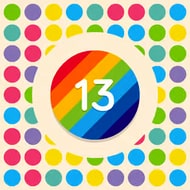
Six distinct minigames make up the core rotation: tower building with paper boxes, a memory-pairing challenge, a driving mode with obstacles, and a handful of additional paw-based challenges layered on top. Because Catpad cycles between them from a single menu rather than locking players into one mode for a full session, players who prefer quick, low-stakes rounds and players chasing a specific high score on one minigame both find a way to play it that suits them. Switching modes costs nothing in terms of progress, so a player who’s frustrated with one minigame’s timing can simply back out and try another without losing anything they’d built up.
The box-stacking mode in particular rewards precision over speed, since dropping a box slightly off-center topples the tower earlier than rushing players expect, while the driving mode leans the opposite direction, rewarding fast reflexes over careful planning. New players tend to approach every minigame in Catpad with the same rushed energy, and box-stacking is usually where that habit gets punished first, since a tower built too fast collapses well before it reaches the heights a more patient player can manage.
Memory-pairing runs at its own pace entirely, unconcerned with either the speed of driving or the precision of stacking, and it functions almost like a palate cleanser between the two more physical modes — a moment where the paw slows down and the challenge shifts from motor control to recall instead.
Shiny power-up balls appear scattered through every minigame, and collecting enough of them triggers Fever Mode, a short burst state where the cat goes noticeably wilder on screen and scoring shifts into a much higher gear. Fever Mode doesn’t last long in any single minigame, so the players who chase high scores most effectively are the ones who save box-stacking or targeting opportunities specifically for the seconds right after a fever trigger rather than spending it randomly on whatever’s on screen at the moment it activates.
Achievement hunters tend to treat Fever Mode almost like a currency, timing their play around when they can trigger it rather than just reacting to power-up balls as they appear. That’s a noticeably different approach from more casual players, who often just enjoy the visual chaos of the mode — the cat’s exaggerated movements, the sudden rush of points climbing on screen — without optimizing around it at all. Both approaches work in Catpad, since the game never punishes a player for treating Fever Mode as spectacle rather than strategy.
Unlocking new decor items for the cat’s home ties directly into overall score and achievements, which gives Catpad a light progression layer sitting on top of what would otherwise be a pure high-score arcade loop. Community discussion around the game often centers on which decor items are hardest to unlock, since a few of them require consistently strong performance across multiple minigames rather than a single lucky Fever Mode run in just one mode.
Power-up balls don’t spawn on a fixed schedule either, which means part of playing Catpad well involves staying alert to the edges of the screen rather than tunnel-visioning on the immediate task in front of the paw.
Variety over depth is the honest way to describe Catpad’s appeal — no single minigame here is especially deep on its own, and that’s a fair criticism players raise regularly, but the rotation between six different modes means the game rarely asks for more than a few minutes of focus at a time before switching things up.
Achievement-focused players and casual players end up experiencing Catpad quite differently even though they’re playing the exact same minigames. One group is quietly tracking which decor items remain locked and replaying specific modes to close those gaps, while the other is happy bouncing between tower building and driving purely for the short bursts of fun each one offers without any long-term goal attached. Neither approach is wrong, and the game’s structure accommodates both without friction.
Collect enough of the shiny power-up balls that appear scattered through whichever minigame you’re currently playing — once enough have been gathered, the cat automatically shifts into Fever Mode and scoring accelerates for a short window before returning to normal.
Over six distinct minigames make up the rotation, including tower building, memory matching, and high-speed driving, with the exact lineup accessible from the main menu once a mode is selected rather than unlocked progressively.
No — the home decoration system is purely cosmetic, giving players something to work toward and personalize without changing how any of the six minigames actually play or score.
Catpad’s whole appeal sits in that gap between low stakes and genuine replay value — nobody’s chasing a leaderboard spot in the memory-matching round out of necessity, but Fever Mode and a home full of unlocked decor items are enough to pull most players back for one more round anyway.