


Cat Coffee Shop

Tomodachi Life: Living the Dream

Joy Pony

Game of Farmers

Life The Game

Good Coffee, Great Coffee

Cinema Simulator











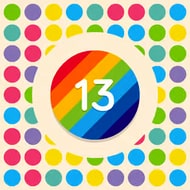









What actually happens once you merge past 10 and the board stops giving you easy triples? That’s the point where Impossible 13 stops being a relaxing number game and starts punishing every careless placement from the rounds before it.
| Genre | Number-merging puzzle |
| Platform | Browser |
| Core mechanic | Connect 3 or more circles sharing the same number and color to merge them into the next value |
| Goal | Reach the circle numbered 13 |
The rule set in Impossible 13 sounds almost too simple to justify a whole game: connect three or more circles that share the same number and color, and they fuse into a single new circle one number higher. Do that enough times, chaining merges across a cluttered board, and eventually you produce the circle numbered 13 — the goal the title is named after, and the one that gets meaningfully harder to reach the higher your numbers climb.
Early boards are forgiving. You’re mostly working with ones and twos, and matching triples is close to automatic since low numbers spawn constantly. The real test of Impossible 13 doesn’t show up until you’re pushing circles into the upper single digits, where matching triples means specifically hunting for a number that’s become rare on a board increasingly filled with values you can’t yet use.
The single biggest mistake new players make is placing high-value circles wherever there’s open space, without thinking about what that does to the board later. A big number stuck in the middle of the grid blocks connections and eats space that smaller, more mergeable numbers could use instead. Community discussion around Impossible 13 consistently points to the same fix: keep your highest current number tucked toward a corner, not the center, so it’s out of the way of active merge chains happening around it.
Overcrowding is the other classic failure. Players who merge without a plan for what comes next tend to fill the board with scattered, non-matching numbers until there’s no legal move left. Every merge should be evaluated not just for the immediate points but for what board state it leaves behind — a merge that clears space for future combos is worth more than one that just happens to be available.
Scoring in Impossible 13 rewards more than the raw act of merging. Chaining multiple merges within a single move triggers combo bonuses, and higher-value merges score more per action than repeatedly clearing low numbers. This changes the optimal strategy from “merge whatever’s available” to actively setting up situations where one connected drag triggers several merges at once.
Players chasing a high score rather than just reaching 13 once tend to sacrifice a few early, easy merges specifically to set up a bigger chain later — a trade that looks counterintuitive in the moment but consistently pays off once the combo bonus lands.
By the time you’re closing in on 13 itself, the board has usually filled with a wide spread of mid-to-high numbers that don’t share matches easily. This is the stretch of Impossible 13 players describe as the actual “impossible” part — not the concept, but the practical reality that a cluttered late-game board makes finding three identical high numbers genuinely rare. Success here comes down to whether your earlier merges left enough open space to maneuver, which is why board management matters more than raw merging speed from the very first move.
Stage double merges rather than single ones where possible, keep your highest-value circles near a corner instead of the center, and avoid placing large numbers where they’ll block future merge chains — board space management matters more than speed.
Higher numbers are rarer by nature, since each one requires merging three matching lower circles first, so the closer you get to 13 the fewer matching triples appear on a board that’s also more crowded with unmergeable leftover values.
The core mode is an open-ended score chase with no fixed end point, though some versions of the game include timed runs or specific goal targets alongside the standard endless format.
Impossible 13 earns its name honestly — reaching that final circle takes more than lucky triples, it takes treating every early merge as a decision about what space you’re leaving yourself for the chains that come later.