


Cat Coffee Shop

Tomodachi Life: Living the Dream

Joy Pony

Game of Farmers

Life The Game

Good Coffee, Great Coffee

Cinema Simulator











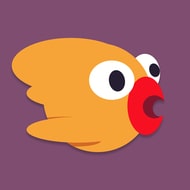





You tap the screen, your bird flaps once, and a fireball you shot two seconds ago is already curving back into your own flight path. That’s the trap at the center of Lava Bird: the same weapon keeping you alive is the thing most likely to end your run. It looks like a simple Flappy Bird clone from the thumbnail, but the moment a second fireball bounces off a wall while you’re still tracking the first, you realize this game asks for more than rhythm tapping.
| Genre | Skill / arcade flying game |
| Core mechanic | Tap or click to flap and fire simultaneously |
| Modes | Single-player endless run, Two-player duel |
| Duel win condition | First player to three points |
Every input in this game does two things at once. Tapping the spacebar or the screen makes your bird flap upward, but it also launches a fireball straight ahead. There’s no separate shoot button, which means positioning and aggression are the same decision. Fire too often while climbing and your own shots stack up in front of you; fire too rarely and the blue birds chasing you close the gap. New players almost always die to their own fireball within the first thirty seconds, not because the game is unfair, but because nobody expects their weapon to double as an obstacle.
Once you get past that first instinctive mistake, the loop becomes readable. You start timing flaps so fireballs clear the screen before the next one launches, spacing your climbs instead of mashing. Community threads about the game call this “pacing the spit,” a nod to the in-game description of the bird’s fireball ability as a side effect of an unfortunate condition rather than a chosen power.
Spikes add a second layer on top of the fireball timing. They don’t move, but they force you to plan your vertical position several flaps in advance, so a fireball dodge and a spike dodge frequently demand opposite movements at the same moment.
The blue birds chasing you aren’t just background threat, they actively close distance and clutter your firing lane. Early in the game they trail loosely enough that a few stray fireballs clear them out without much effort. By the time you’ve survived a couple of minutes, they bunch closer together, and a single fireball can chain through two or three of them if you time the shot while they’re still lined up.
Score-focused players treat this bunching as the main scoring opportunity, since chaining kills is what unlocks the bonus story fragments mentioned in the game’s own description. Casual players, by contrast, tend to just survive and ignore the chase entirely, which is a completely viable way to rack up distance but leaves the story content untouched.
The single-player mode is an endless survival run: no checkpoints, no lives beyond the one hit that ends you, just distance and enemy kills as your only stats. Two-player mode changes the goal completely. Player one controls a red bird with the W key, player two controls a blue bird with the up arrow, and the pair race and fight in the same lava cave until someone reaches three points.
Duel matches expose a different skill than the endless run. Instead of just surviving spikes, you’re baiting your opponent into flying through your fireball’s path, which means good duel players deliberately fly erratically to make their shots less predictable.
Positioning discipline matters more in duels than reflex speed, since a calm player who holds a steady altitude band and only breaks pattern to punish an opponent’s climb will usually out-score someone who’s just flapping on instinct.
Lava Bird ties its narrative unlock to enemy kills rather than distance, which is an unusual choice for this genre. You won’t see story fragments by flying cautiously and avoiding every blue bird; you have to actively hunt kills, which pulls you closer to the spikes and fireball clutter you’d otherwise avoid. This creates a real tension between playing safe for a high score and playing aggressive for content, and it’s one of the things players bring up most in reviews of the game, some finding it a clever design, others feeling it punishes the safer, longer-lived playstyle.
You force your opponent into your fireball’s line rather than chasing their movement directly. Since fireballs travel straight ahead once launched, flying at a slight diagonal and firing as your opponent’s bird crosses that line lands hits more reliably than head-on shooting.
Fireballs bounce forward off surfaces instead of disappearing, so a shot fired early in a run can loop back into your flight path seconds later. Spacing out your flaps so you’re not stacking multiple live fireballs at once is the main fix.
Killing blue birds during a run, rather than simply surviving, is what reveals story fragments. Chaining kills while they’re bunched together is the fastest way to trigger more of it in a single session.
Lava Bird turns a familiar flap-to-survive formula into something stickier by making the fireball both your only weapon and your biggest liability, and once you’ve felt a shot you fired yourself clip your own wing mid-climb, you stop treating the spacebar as a simple flap button.