


Cat Coffee Shop

Tomodachi Life: Living the Dream

Joy Pony

Game of Farmers

Life The Game

Good Coffee, Great Coffee

Cinema Simulator














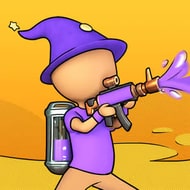







You spawn into a match already mid-fight, paint splattering across the wall behind you before you’ve even found your first target, and Paint Strike doesn’t give you a second to get your bearings. Coverage starts the moment the round does, whether you’re ready or not.
Paint Strike measures success in territory, not eliminations. Every match runs on a timer, and the team that’s covered the most surface area in their color when time runs out wins the round — splatting opponents matters, but mainly because it clears them off contested ground for a few seconds rather than removing them permanently. Beginners coming from standard shooters tend to chase kills first, and that habit costs matches. A player who ignores fights entirely and just paints empty walls and floors can outscore a player racking up splats but never covering ground.
Capture Zones complicate this further. Certain areas on each map score extra when held in your team’s color, which means the optimal strategy usually isn’t spreading paint evenly across the whole map — it’s identifying which zones are worth defending and rotating your team toward them as the clock runs down.
The paint tank itself runs dry fast. Firing continuously drains it within seconds, and refilling means returning to your team’s paint station, which takes you out of the fight for a stretch. Managing that tank — firing in controlled bursts instead of holding the trigger down — separates players who stay useful for a full round from players who spend half the match walking back to refill.
Earnings from matches go toward unlocking better versions of these weapons along with cosmetic customization for your character. There’s no mechanical advantage to the cosmetics, but the weapon upgrades genuinely matter — a base-tier paint blaster covers noticeably less area per shot than an unlocked one, which becomes obvious fast once you’re playing against opponents who’ve put in more matches.
Every Paint Strike map has a handful of routes that experienced players default to, usually the ones offering the fastest rotation between your team’s paint station and the nearest Capture Zone. New players tend to wander the map somewhat randomly early on, which wastes tank charges on walls nobody’s contesting. Once you’ve played a map a few times, the efficient loop — station, zone, back to station — becomes obvious, and that loop is most of what separates a coordinated team from one that’s just running around splashing color wherever.
Community discussion around Paint Strike tends to split over how aggressive to play. Some players push straight into enemy territory to disrupt coverage early, while others hang back defending a single zone all match. Both approaches show up in competitive matches, and neither is clearly better — it depends heavily on whether your team can actually hold what it takes.
Beyond chasing splats over coverage, the second most common beginner mistake in Paint Strike is firing at range when a target is barely inside effective coverage distance. Paint blasters lose accuracy the farther the shot travels, so spraying at a distant opponent usually just wastes tank capacity that would’ve covered three times the ground fired up close. The 90-second round length also surprises players used to longer shooter matches — there’s no time to warm up, which is exactly why fast map knowledge matters more here than in most team-based shooters.
Rounds typically run 90 seconds, which is short enough that early positioning and paint tank management matter more than they would in a longer match — there’s no time to recover from a slow start.
No — splatting an opponent only removes them from the fight temporarily. The win condition is total map coverage in your team’s color when the timer ends, so painting territory matters more than racking up eliminations.
The paint blaster is the safest starting choice, offering balanced range and coverage without the exposure risk of a roller or the situational nature of splash bombs, which work best once you understand which Capture Zones are worth locking down.
Paint Strike rewards the player who treats every Capture Zone like it’s worth more than the fight happening next to it — grab a paint blaster, manage your tank, and remember that a wall painted your color counts for more than another splat on the scoreboard.