


Cat Coffee Shop
Tomodachi Life: Living the Dream
Joy Pony

Game of Farmers
Life The Game

Good Coffee, Great Coffee

Cinema Simulator














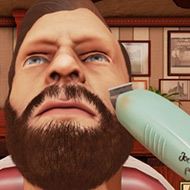
What actually makes a customer happy in Barbershop Simulator? The honest answer is that the game barely tells you, and figuring it out through trial, error, and a genuinely confusing set of on-screen meters is most of the appeal.
| Genre | Simulation |
| Tools | Clippers, razors, scissors |
| Goal | Satisfy each customer’s haircut request |
| Feedback | Unlabeled satisfaction meters |
Every customer sits down expecting some version of a haircut or shave, and your tools are exactly what you would expect: clippers for bulk trimming, a razor for close detail work, and scissors for finer shaping. Moving any of them requires a steady hand, since the physics-based cutting model means dragging a clipper too far off its intended line takes hair off in places the customer never asked for.
Razors are the least forgiving tool in Barbershop Simulator. They cut cleanly when angled correctly against the skin, but a slightly wrong angle can nick the customer, and while that mostly plays for laughs rather than serious consequence, it does tank whatever satisfaction meter you were building toward.
Several meters track how a customer feels about the cut in progress, but Barbershop Simulator offers no real tutorial spelling out what each one measures or how quickly they rise and fall. Most players end up learning through repetition, connecting a specific mistake, like an uneven clipper pass, to a meter dropping shortly after, rather than through any guidance the game provides directly.
This lack of explanation is one of the most consistently mentioned frustrations in player discussion around the game, and it is a fair one. A single sentence of guidance would save new players a genuinely rough first hour of guessing.
Once a haircut looks done, pressing the finish button locks it in, except that the finish button itself is one of the more commonly reported trouble spots, occasionally requiring more than one press before it actually registers. Players who mash it repeatedly the moment they think a cut is complete tend to have a smoother time than players who click once and wait, since a single unresponsive press can sometimes be mistaken for the cut genuinely not being finished yet.
A recurring complaint from players is that clippers or razors occasionally drift toward the chin or cheeks instead of staying precisely where dragged, which can undo a clean cut in a single careless pass. Slower, shorter strokes tend to reduce how often this happens compared to long, fast drags across the whole head.
Barbershop Simulator built a large audience through video clips long before most of those viewers ever touched the game themselves, largely because of exactly the kind of chaotic moments its rougher edges produce: a razor nick at the worst moment, a clipper drifting into an eyebrow, a customer’s satisfaction meter cratering over something that looked like a perfectly fine cut. That gap between intended precision and what the physics actually deliver is a huge part of why it became something people wanted to watch as much as play.
New players tend to rush a cut, dragging tools quickly to get through a customer fast, which is exactly backwards. Slower, more deliberate strokes in Barbershop Simulator produce cleaner results and fewer accidental nicks than a fast, confident pass ever does, especially before you have learned how a specific tool responds to your movements.
It is a known rough edge in the game. Pressing it a second time if nothing happens immediately usually resolves it, rather than assuming the cut itself is incomplete.
The game never explains them directly, but they generally track how evenly and precisely the cut matches what the customer asked for, dropping noticeably after visible mistakes like an uneven pass or a nick from the razor.
No, drifting toward the chin or cheeks is a known issue rather than an intended mechanic, and it happens less often with slower, shorter strokes than with fast, long drags.
Barbershop Simulator is rough in ways that would sink a more serious simulation, but that roughness is precisely the point for most of the people who keep coming back to it. Once you learn to read an unlabeled meter by feel and stop fighting the finish button, cutting hair in this particular shop stops being frustrating and starts being genuinely funny.