


Cat Coffee Shop

Tomodachi Life: Living the Dream

Joy Pony

Game of Farmers

Life The Game

Good Coffee, Great Coffee

Cinema Simulator




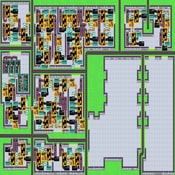




















Udonge in Interspecies Cave looks like a straightforward chibi pixel art shooter but plays like a game that punishes autopilot harder than its visual style suggests it should. Reisen Udongein Inaba — the Touhou Project’s lunar rabbit — moves cleanly, shoots reliably, and jumps with a consistent arc, and none of that saves you when Stage 2’s corridor geometry starts funneling monsters from both ends simultaneously. The controls are not the challenge. Reading the cave is.
| Genre | Side-scrolling action / Adult |
| Platform | PC / Android |
| Protagonist | Reisen Udongein Inaba (Udonge) |
| Stages | 3 stages, each with a boss encounter |
| Playtime | Under one hour per run |
| Source material | Touhou Project fan work |
The game gives Reisen three tools and expects the player to solve every problem with them: directional movement, a jump with a fixed and readable arc, and a forward-firing projectile. What changes across the three stages is how the cave arranges monsters relative to the space Reisen has to work with. Stage 1 is generous with room width and enemy spacing. Stage 3 is not. The entire difficulty curve of Udonge in Interspecies Cave lives in that narrowing, and players who understand this early stop asking why they are taking damage and start asking where they positioned themselves two seconds before they took it.
Enemy movement patterns are the primary thing worth studying on a first run. Ground creatures patrol in loops that repeat without variation, which means watching one full cycle before entering a room effectively solves it. The faster variants that appear in Stage 2 onward break this approach because their detection range triggers an acceleration that cuts the observation window short. Against these, the correct adjustment is creating enough lateral distance that their acceleration gives Reisen time to fire two or three shots before they close. Players who panic-retreat straight backward tend to run into whatever was behind them.
Projectile-firing monsters demand a different prioritization entirely. Because they contribute ranged damage while Reisen is dealing with ground-based threats, leaving them active while addressing closer enemies is a reliable way to arrive at each stage boss with a damaged health bar. The community shorthand is straightforward: ranged types first, always, regardless of which monster is physically closer. Two shots on the ranged type before turning to the melee threat costs a half-second. Absorbing three ranged hits while handling a ground creature costs significantly more.
When Reisen’s health reaches zero, she collapses. A gauge appears on screen, and the player must alternate between the left and right movement keys as rapidly as possible to fill it. Fill it completely and Reisen recovers with a sliver of health remaining. Fail — because a monster reaches her before the gauge completes — and the game ends. This is the mechanic that generates more community discussion than anything else in Udonge in Interspecies Cave, splitting cleanly between players who find it a fair high-pressure skill check and players who find keyboard alternation at that speed actively uncomfortable to execute. Several players have noted switching to a lighter membrane board from a mechanical one because the required alternation speed felt like it risked key damage.
Experienced players describe a mental shift that happens after a few runs: the downed state stops feeling like an emergency and starts feeling like a resource with a cost. In the wide sections of Stage 1, the recovery window is comfortable. By Stage 3, it compresses to the point where down-recovery becomes a genuine crisis rather than a manageable interruption. Players who practice the alternating rhythm outside of high-stakes moments report surviving downed states in Stage 3 at a significantly higher rate than those who only encounter the mechanic when they can least afford to fail it.
Each stage ends with a boss that functions as a distinct mechanical test rather than a scaled-up corridor enemy. The bosses follow repeating patterns, but recognizing those patterns requires surviving the first full cycle — and arriving depleted from stage attrition means the learning window costs health the player may not have to spend. Players who clear Stage 1 and Stage 2 with more than half their health remaining have room to adapt. Players arriving near zero are essentially solving the boss pattern while simultaneously managing a recovery gauge that is one hit away from triggering.
One detail experienced players notice is the brief pause between the final corridor section and the boss trigger. Several runs end not from the boss itself but from walking into the activation zone without checking remaining health and position. Stopping at the threshold, assessing Reisen’s health, and entering from a centered position rather than a cornered one produces meaningfully better outcomes — particularly in Stage 3 where the opening seconds of the pattern demand immediate lateral movement.
Clearing each of the three stages unlocks a corresponding gallery section accessible from the title screen. The gallery stores scenes from that stage’s encounters, and a player who completes all three stages has full gallery access regardless of how many times Reisen was downed during those runs — the unlock condition is stage completion, not a clean run. This means speedrunners and players focused on health-score optimization are never locked out of content by playing well, and players who want to view specific scenes are not required to replay stages to reach the moment that triggers them.
The honest criticism is the same one that applies to the game’s overall length: three stages means three gallery sections, and some players feel the content volume does not match the runtime expectations they arrived with. Players who approach Udonge in Interspecies Cave as a compact experience rather than an extended one tend to find the ratio of action to content satisfying. Those expecting a longer arc rarely do.
Yes, and players who complete Udonge in Interspecies Cave without a single downed-state event consider it the primary personal challenge beyond basic completion. It requires consistent enemy prioritization, disciplined positioning through Stage 2’s narrow sections, and entering each boss with enough health to absorb the first pattern cycle without the gauge emptying. It is achievable on a first run for players with strong run-and-gun backgrounds, but most players encounter the recovery mechanic at least once during the Stage 3 boss on their initial attempt.
Ground-based monsters patrol fixed loops that ignore Reisen’s position until she enters their detection range. Once triggered, most variants accelerate toward her current location rather than anticipating movement, which makes lateral repositioning after triggering detection an effective way to create shooting angles. The faster Stage 2 variants have shorter detection range but higher acceleration, making the standard observe-then-enter approach riskier. Projectile-firing monsters fire on a timed interval regardless of distance — which is precisely why addressing ranged types before anything else remains the community’s consistent first recommendation.
Replay value after full gallery unlock comes from personal benchmarks: health-remaining scores at each boss, attempts to complete the run without triggering the down-recovery mechanic, and movement routing to reduce total stage time. A community focused on completion speed has developed around Udonge in Interspecies Cave, comparing Stage 1 and Stage 2 clear times and working out the fastest consistent path through each corridor section. The game’s compact structure makes run comparison straightforward — the same three stages and the same boss patterns provide a stable test environment for incremental improvement.
Udonge in Interspecies Cave earns its reputation within its niche by committing fully to the run-and-gun structure it inherits from 16-bit action games and building its adult content directly into the mechanical consequences of that structure. Reisen Udongein Inaba controls well enough that every death feels like a positioning error rather than an input failure, and the three-stage arc delivers a complete experience at its compressed runtime. The down-recovery mechanic remains the game’s most divisive feature and its most memorable one — the moment where the keyboard becomes the obstacle and the cave stops feeling like a backdrop.