


Cat Coffee Shop

Tomodachi Life: Living the Dream

Joy Pony

Game of Farmers

Life The Game

Good Coffee, Great Coffee

Cinema Simulator























In Granny Remake you start locked inside an abandoned school with nothing but a single pistol and a vague understanding that eight keys are hidden somewhere in the building, which matters because none of the exits open without them. Granny is already awake, and she knows the layout better than you do.
The entire structure of the game revolves around locating eight glowing keys scattered through classrooms, offices, and side rooms across the school. Walking close to one and pressing F or E picks it up, but the glow that makes a key easy to spot from a distance is the same thing that tends to draw Granny toward your position if you linger too long deciding whether a room is safe.
Some keys sit in plain sight on a desk or windowsill. Others are tucked behind broken furniture or inside offices that require solving a small environmental puzzle first, like finding a code or moving an obstacle out of the doorway. The mix of easy and hidden keys is deliberate, and it keeps players from clearing the school on autopilot once they have run it a few times.
Unlike stealth-only takes on the Granny formula, this version leans into direct confrontation. You start with a basic pistol and pick up stronger weapons as you explore, which means every new room is partly a resource check and partly a threat check. WASD or arrow keys handle movement, the mouse aims and turns the camera, and the left mouse button fires, giving the whole thing a shooter feel layered on top of the survival-horror skeleton.
Granny herself reacts fast once she is alerted, closing distance quickly enough that hesitating in an open hallway is usually a mistake. Shooting her slows her down rather than eliminating the threat permanently in most encounters, so retreating toward a defensible doorway while reloading is often smarter than standing your ground in the open.
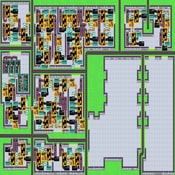
The building itself is built to disorient. Dark hallways connect classrooms that all look similar at a glance, and offices with broken desks and bloodstained walls serve as landmarks once you have passed through them once or twice. Learning the layout matters as much as combat skill, since backtracking through an unfamiliar hallway while being chased is where most runs of Granny Remake end early.
Classrooms tend to have more open sightlines, which favors shooting from a distance, while the tighter offices favor retreating and funneling Granny through a single doorway. Recognizing which room type you are in before a fight starts changes the right call completely.
New players tend to grab the first key they see and then sprint toward the next glowing object without checking the room around them, which is exactly the pattern that gets a player cornered. Slowing down to clear a room’s immediate exits before committing to picking up a key costs a few seconds but avoids most of the early ambushes.
The other common mistake is treating every encounter as one to fight through. Ammo is limited enough in the early game that running from an unnecessary fight to conserve bullets for a key room later is usually the better trade.
Players who came to the franchise expecting pure stealth are split on Granny Remake’s combat focus. Some appreciate having a way to fight back instead of only hiding, while others feel it changes the tension of the original hide-and-seek formula into something closer to a straightforward horror shooter. Both camps show up in discussions about the game, and it is one of the more consistently debated aspects of this particular version.
None of this makes Granny Remake a subtle game, but the combination of key-hunting, resource management, and a school layout that punishes careless sprinting gives it more structure than a simple chase would. By the time you are holding the eighth key with the exit finally in sight, every dark hallway behind you has earned the caution you learned to give it.