

Cat Coffee Shop
Tomodachi Life: Living the Dream

Joy Pony

Game of Farmers
Life The Game

Good Coffee, Great Coffee
Cinema Simulator











Click To Continue looks, from the outside, like exactly what its title promises: a simple browser game you click through without much thought. What it actually hands you is a minimalist shooter where time itself only moves when you do, turning every room full of red, crystalline enemies into a puzzle you solve one deliberate step at a time.
| Genre | First-Person Puzzle-Shooter |
| Core Mechanic | Time moves only when the player moves |
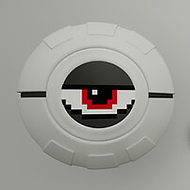
| Art Style | Minimalist white, black, and red |
| Weapons | Guns, thrown objects, melee |
The defining rule is simple to state and hard to master: time crawls forward at a near standstill until you move, turn, or fire, at which point it snaps to full speed for exactly as long as your action takes. Standing completely still is a viable tactic, not a failure state, and reading a room of frozen enemies while time barely creeps forward is where most of the actual thinking happens in Click To Continue.
Because every motion costs a sliver of real-time speed, wasted movement is genuinely punished. Turning to check a corner you did not need to check gives every enemy in the room a fraction of a second to react, which is often enough to end a run that looked clean a moment earlier.
Firearms have limited ammo and can be thrown once empty, often more effectively than an enemy expects, while melee weapons and thrown objects let you clear a room without ever pulling a trigger. The katana in particular can be thrown and caught out of the air mid-motion, which turns a single weapon into a repeatable tool rather than a one-time use item, and chaining a thrown katana catch into an immediate second throw is one of the more satisfying tricks the game rewards once you have the timing down.
New players tend to treat the slowed time as an invitation to move constantly, scanning every direction out of habit. That instinct works against you, since every unnecessary turn advances time for nearby enemies. The stronger habit is planning a full sequence, which enemy to hit first, which weapon to throw, where to step next, before initiating any movement at all.
The other common mistake is forgetting that thrown objects of almost any kind can stagger or kill an enemy. Players who only rely on guns run out of ammo constantly, while players who treat every object in a room as a potential weapon clear scenes with far more room to spare.
A single hit typically ends the attempt, and there is no regenerating health to fall back on. That harsh restart structure is the most consistently debated part of Click To Continue among players, some treating it as the entire appeal, since a clean clear feels genuinely earned, while others find restarting an entire scene over one mistimed turn frustrating compared to games with more forgiving checkpoints.
Not entirely. Time crawls forward at a near standstill rather than freezing outright, which still gives sharp-eyed enemies a narrow window to react if you take too long deciding your next move.
Yes, an empty gun can be thrown at an enemy for a hit, which is often more useful in a tight spot than reloading or switching weapons mid-encounter.
Click To Continue earns its odd title in a roundabout way, since every clean clear really does feel like clicking forward through a scene frame by frame rather than reacting in real time. Once throwing and catching that katana mid-swing becomes second nature, standing still in a room full of enemies stops feeling passive and starts feeling like the most aggressive option available.